

Project Kuiper vs Starlink is shaping up to be the defining matchup in satellite broadband. Both aim to connect the unconnected with low-Earth-orbit (LEO) constellations, but they’re at very different stages. Starlink is already live worldwide with millions of customers and thousands of satellites in orbit. Kuiper, Amazon’s LEO network, began deploying production satellites in 2025 and targets initial service as deployments scale.
In this guide, we explain how they compare on availability, hardware, performance, pricing, security, mobility, and roadmap—then give you a practical recommendation based on your use case. Where appropriate, we cite official specs and fresh reporting so you can trust the numbers. If you’re deciding between them today, the short version is that Starlink is the proven option for homes, businesses, mobile, and maritime—while Kuiper is rapidly moving from launch pad to market, with compelling tech and deep AWS integrations that could pay off as coverage matures.
The Quick Verdict (and who each suits)
If you need reliable satellite internet right now, Starlink wins on availability, breadth of plans (Residential, Roam, Business, Maritime, Aviation), and a long track record of iterative improvements. Its constellation counts in the thousands and services operate in 100+ countries, with typical download speeds over 100 Mbps and latency that supports video calls and cloud apps.
Starlink also offers specialized hardware for mobility and enterprise operations, and it publishes conservative speed ranges that align with real-world user reports. By contrast, Project Kuiper is still building out. Amazon started full-scale deployments in April 2025, has passed the 100-satellite mark, and says customer service begins as satellites and ground infrastructure go live; Kuiper’s terminals are promising—ranging from an ultra-compact 100 Mbps unit to an enterprise model targeting 1 Gbps—but service is in its rollout phase. If you’re planning for late-2025 into 2026 and beyond, Kuiper could become a viable alternative—especially for organizations already deep in AWS. For buyers choosing in 2025, Starlink’s availability and ecosystem breadth make it the safer pick.
Availability & Deployment Status
Starlink’s service is live in 100+ countries and continues to expand. As of August–September 2025, independent trackers and spaceflight outlets put the constellation at roughly 8,100+ satellites in orbit, with routine launches adding capacity each month. Starlink’s official updates page also cites rapid growth, now 6M+ active customers worldwide.
Kuiper is newer: Amazon launched two prototypes in 2023, then began production deployments in April 2025 with 27 satellites on ULA’s Atlas V; subsequent launches through mid-2025 lifted the constellation past 100 satellites, with Amazon publicly targeting customer service starting in late 2025 as coverage and ground infrastructure mature. Bottom line: if you need confirmed service today, Starlink is broadly available; if you can wait, Kuiper’s footprint is scaling quickly but isn’t yet commercial at the same breadth.
Constellations, Launch Cadence & Partners
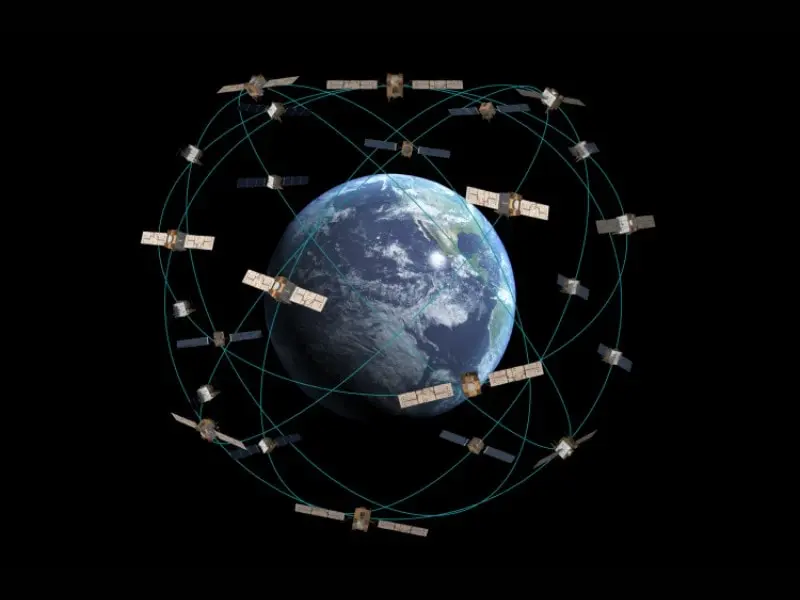
Starlink’s head start comes from its vertically integrated launch capability (Falcon 9), enabling dozens of missions annually and a continuous upgrade cycle for satellites and ground stations. In late 2025, coverage expanded with frequent polar and mid-inclination launches, sustaining capacity for new users and mobility markets. Kuiper’s constellation targets ~3,200 satellites with 80+ planned launches across multiple providers (ULA, Blue Origin, Arianespace, and even SpaceX), plus a new Florida processing facility to increase cadence. Amazon kicked off production deployments in April 2025 (Atlas V), followed by additional Atlas V and Falcon 9 missions that carried the constellation past 100 satellites by August.
Multi-provider launch diversity reduces single-vendor risk but also depends on those providers ramping up. Expect Kuiper’s cadence to accelerate into 2026 as vehicles like Vulcan, Ariane 6, and New Glenn come fully online. If sustained, customers should see coverage expand from initial regions toward broader service tiers.

Hardware & Installation: Dishes, Terminals, and Power
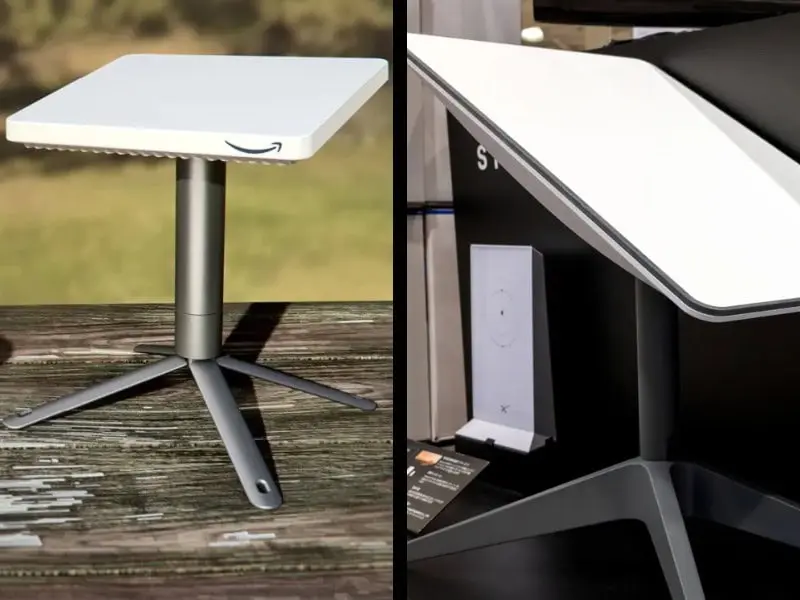
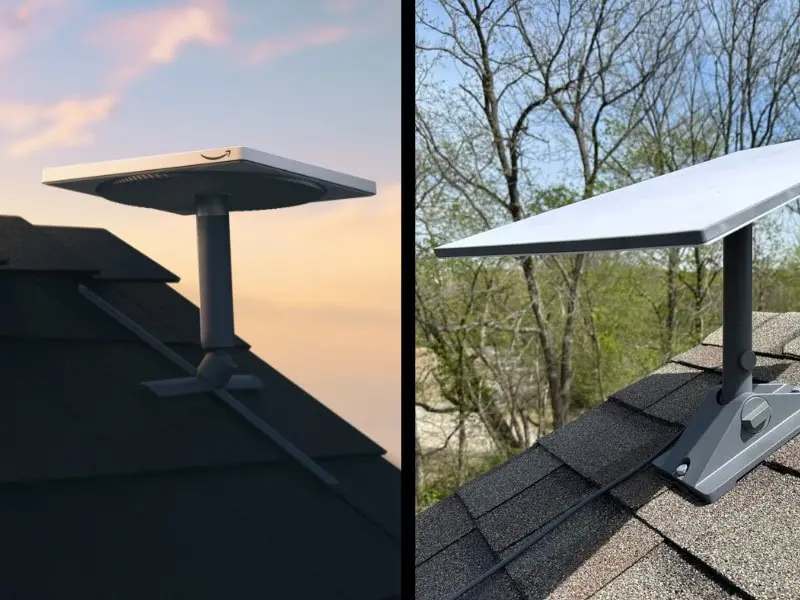
Kuiper hardware. Amazon has revealed three terminal classes: an ultra-compact 7-inch square terminal (up to 100 Mbps), a standard 11-inch square (up to 400 Mbps), and a large 19×30-inch rectangular terminal (targeting 1 Gbps) for enterprise, government, and telecom.
All share the custom Prometheus baseband chip that Amazon says blends 5G modem logic, cellular base-station capabilities, and microwave backhaul traits—used not only in the terminals but also on satellites and gateway antennas. These designs prioritize affordability and manufacturability at scale. Starlink hardware. The current lineup spans Mini, Standard, Standard Actuated, and Performance (Gen 3) for fixed, mobile, and maritime/aviation uses. Performance Gen 3 ships with an advanced power supply and ruggedized antenna for harsh environments; Starlink also details typical user speeds and environmental specs publicly. For power and mounting, Starlink emphasizes rapid, DIY-friendly setups, while Kuiper’s install details will firm up as service opens to customers.
Speeds, Latency & Performance (today and 2026)
Starlink today. Starlink states typical download speeds between ~45–280 Mbps, uploads 10–30 Mbps, and latency ~25–60 ms on land—enough for streaming, gaming, and HD video calls. The Performance (Gen 3) kit currently supports ~400+ Mbps peak downlink and is built for resilience in heat, cold, moisture, and motion.

Kuiper’s target speeds. Amazon positions 100 Mbps (ultra-compact), up to 400 Mbps (standard), and up to 1 Gbps (enterprise) terminals. Gigabit on Starlink? Starlink’s Business pages now flag “Gigabit speeds available in 2026” via service plan upgrades (no new hardware needed for the Performance kit), aligned with third-generation satellites the company says will deliver >1 Tbps downlink capacity per satellite starting H1 2026. Translation: Starlink customers on Performance hardware should see higher tiers as the next-gen constellation lights up, beginning in the most remote, uncongested regions first. Kuiper’s enterprise terminal targets 1 Gbps, but real-world performance will track how quickly Amazon densifies coverage and inter-satellite networking.
Pricing, Plans & Total Cost of Ownership
Exact Kuiper pricing isn’t public yet; Amazon stresses affordability and multiple tiers. Expect variations by region and plan class (consumer, small business, enterprise). Starlink pricing is transparent and live now, with regional differences: Residential and Roam are widely available, Business/Priority adds guaranteed capacity, while Maritime and Aviation target mobility fleets. Public aggregators and Starlink’s own pages illustrate typical monthly fees and one-time hardware costs, which—importantly—are proven line items you can budget for today. Businesses should model lifetime costs: hardware, plan upgrades as capacity improves (e.g., potential Gigabit service tiers in 2026), and any add-ons (static routing, SD-WAN, cellular backup).
For consumers, Starlink’s used-equipment market and periodic promos can lower upfront costs. Kuiper’s ultimate ownership cost will hinge on terminal MSRP, service tiers, and any AWS-integrated discounts for enterprise buyers; keep an eye on Amazon’s announcements as beta turns to broader availability. If you must decide in 2025, Starlink’s clear, current pricing makes procurement straightforward; if you can pilot both in 2026, revisit TCO with live quotes for an apples-to-apples comparison.
Ecosystems: Mobility, Enterprise & Cloud Integration
Starlink’s ecosystem is broad today: Residential for homes and cabins, Roam for RVs and off-grid work, Maritime for vessels, Aviation for airlines and charters, plus Business/Priority for fixed sites that need higher throughput and better contention. Its rugged Performance hardware is rated for harsh environments and in-motion use; maritime and aviation offerings are actively deployed. Kuiper’s ecosystem will lean heavily on AWS—from ground infrastructure to integration points with cloud networking, edge compute, and security services.
Amazon’s public-sector and telecom partnerships suggest natural fits in government, backhaul, and hybrid-cloud architectures once service is live. Kuiper also just notched an aviation milestone—its first airline partnership (JetBlue) for in-flight connectivity, starting 2027—which signals enterprise-grade ambitions beyond residential broadband. For organizations already standardized on AWS, Kuiper’s cloud adjacency is compelling; for teams that need mobility SKUs right now, Starlink’s portfolio is the practical choice.
Security, Resiliency & Governance
Both providers emphasize encryption, frequent over-the-air updates, and layered defenses typical of modern WAN services. Starlink’s security posture has matured alongside its user base, and the platform receives continuous software updates across terminals, satellites, and gateways. Kuiper’s architecture benefits from Amazon’s experience operating hyperscale infrastructure, with Prometheus silicon enabling high on-satellite throughput and AWS tie-ins that should streamline observability, identity, and policy for enterprise customers as services launch.
On resiliency, Starlink’s sheer constellation size and high launch cadence help absorb regional load and satellite attrition. Kuiper’s resiliency will rise as the constellation fills out and as gateway diversity increases. For regulated sectors, both offerings should be reviewed against compliance needs (PII, data residency, lawful intercept). Governments will weigh policy considerations too; Starlink’s role in conflicts underscores the importance of governance and service-continuity agreements at national levels. Expect both providers to expand documentation and third-party validations as competition heats up.
Real-World Performance & Use Cases (residential, commercial, mobile, maritime)
Residential/rural. Starlink’s typical speeds and latency already support streaming, telehealth, and work-from-anywhere; most installs are self-service with a clear southern sky. For homes waiting on Kuiper, track coverage maps and beta invitations in late 2025 into 2026. Commercial/branch. Starlink Business/Priority combines higher burst rates and better contention, often paired with LTE/5G for failover; expect Kuiper to position enterprise SKUs with AWS backbones and edge services as it turns up. Mobility.
Starlink Performance (Gen 3) is built for in-motion land and sea, and its Maritime/Aviation units are already sailing and flying. Kuiper’s first airline deal (JetBlue) shows momentum on high-throughput mobility once service begins. Remote operations. Mining, energy, media, and emergency response teams benefit now from Starlink’s portable terminals; Kuiper’s enterprise 1 Gbps terminal hints at strong future fixed-site backhaul. Across categories, Starlink’s depth and field history are decisive in 2025. By 2026–27, evaluate Kuiper pilots where AWS integration and promised throughput align with your architecture.
Roadmaps: What’s Next Through 2026
Starlink has publicly signaled Gigabit-class service tiers in 2026 tied to Performance (Gen 3) hardware and third-generation satellites with an order-of-magnitude more capacity per spacecraft. The company says V3 satellites begin launching in Q1 2026, and plan upgrades—not new customer hardware—will unlock higher rates first in uncongested regions. Kuiper’s roadmap centers on rapid constellation build-out via 80+ launches and scaling ground infrastructure; Amazon’s latest updates cite >100 satellites deployed with more launches queued and service targeted to begin in late 2025, expanding through 2026.
For buyers, that means Starlink will keep raising ceilings where it already serves users, while Kuiper will widen initial coverage and service tiers as satellites, inter-satellite links, and gateways come online. If Gigabit WAN is a 2026 requirement, Starlink’s stated plan gives it a clear near-term path; if your gating factor is AWS-aligned integration or procurement, Kuiper’s maturation in 2026–27 could be the strategic bet.
Bottom line: Our Recommendation
For 2025 deployments, choose Starlink unless your project can wait for Kuiper’s ramp. Starlink is current-generation, widely available, and proven across residential, commercial, mobility, and maritime—with transparent pricing, published performance ranges, and a hardening ecosystem of accessories, integrators, and field knowledge. Looking to 2026, Starlink’s roadmap targets Gigabit-class plans on its Performance hardware as V3 satellites lift, while Kuiper expects to transition from beta to broader commercial service with 100 Mbps to 1 Gbps terminal options.
If you’re already invested in AWS and can pilot in late-2025/2026, keep Kuiper on your shortlist for cloud-adjacent networking and potential enterprise economics. But if you need to connect sites, vehicles, or vessels now—and want an option that has had time to iron out bugs at scale—Starlink remains the safer, faster, and more versatile pick today. Re-evaluate in 12 months as Kuiper’s coverage and pricing are public, then benchmark both under your real workloads before making a multi-year commitment.
Connectivity News & Updates

Starlink for Businesses and Multi-Building Properties – Campus & Chain Solutions
In the modern commercial landscape, connectivity isn’t just an amenity—it’s...
T-Mobile Starlink Business Internet: SuperBroadband Explained
T-Mobile Starlink business internet officially became a real product on...

Starlink in Rural Areas – What to Expect and How We Make It Reliable
For decades, living in the country meant making a difficult...
Common Starlink Installation Mistakes (And How Our Technicians Avoid Them)
When you receive your Starlink kit, the “plug-and-play” marketing makes...